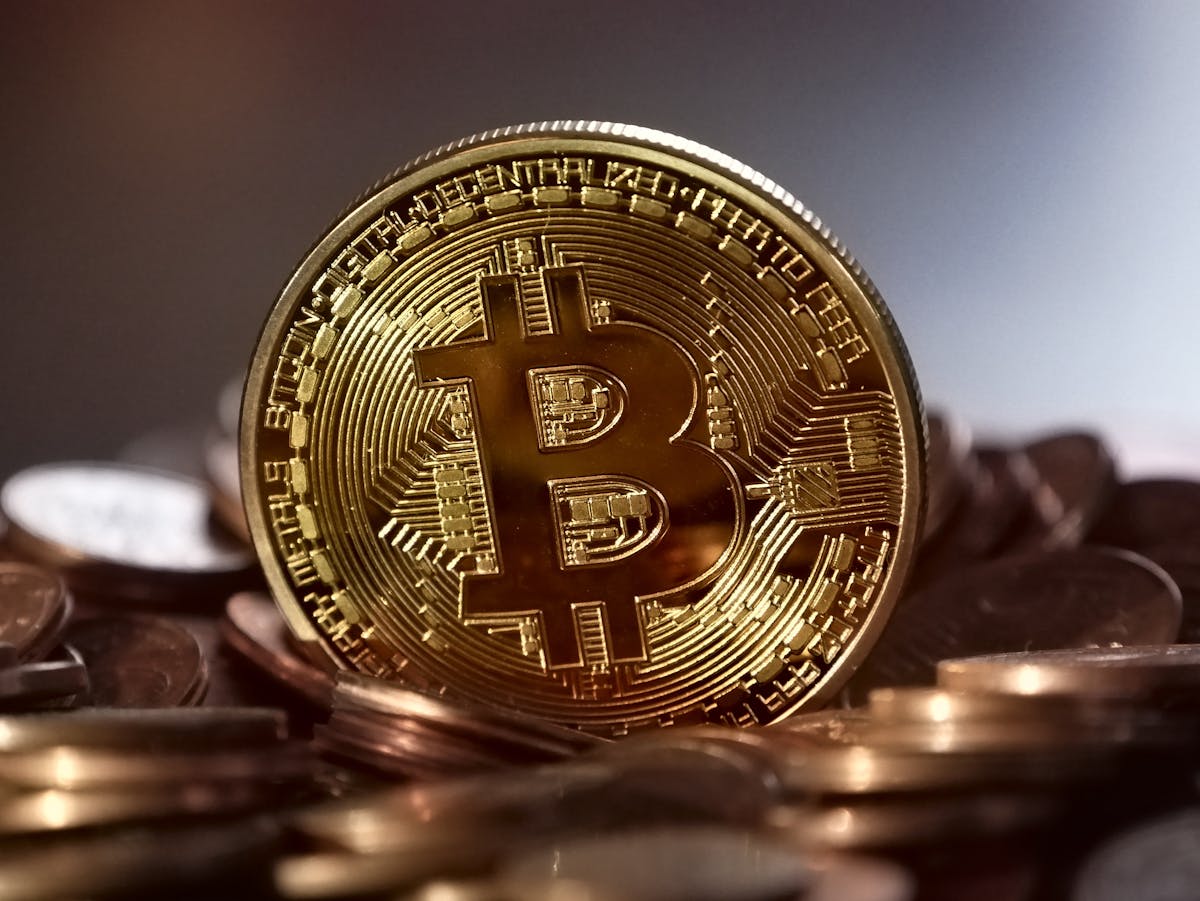
Photo: Pexels
Bitcoin is doing something unusual today: almost nothing. The price has spent the morning pinned between roughly $74,000 and $75,500, drifting sideways while the rest of the market waits for a single number. That number arrives at 8:30 a.m. Eastern time — 6:30 p.m. in Pakistan — when the US Bureau of Labor Statistics publishes October's consumer price index. It is the last inflation reading before the Federal Reserve decides on December 8–9 whether to raise interest rates again, and traders have spent the last four days pricing in a hike at roughly 77% odds. A cool print could unwind that bet in minutes. A hot one could lock it in — and push Bitcoin back toward the $73,000 line it barely held on Sunday night.
This article was written before the release, so it cannot tell you the number. What it can do is explain what the number is, why it moves Bitcoin at all, what the market expects, and the three ways today can plausibly go. If you only read one thing about crypto today, make it the scenarios section — that is where the trade actually lives.
Bitcoin's quiet Tuesday: the numbers so far
Bitcoin traded at about $74,412 in the morning, according to Finnhub's Binance data, after opening the day near $74,178 and touching a high of $75,568 and a low of $74,058. On Monday it closed at $75,368. Two days earlier, on Sunday night, it fell to $73,708 — its lowest level since August, according to Reuters — before buyers stepped back in. The coin is down about 10% over the past month and roughly 16% so far in 2026, with a market value of around $1.48 trillion.
What stands out is not the price but the contrast. On Monday, US stocks had their best day since April: the S&P 500 rose 2.35% and the Nasdaq jumped 2.74%. Bitcoin barely moved. Ether sat near $2,135, and the crypto fear-and-greed index read 32 — still in fear territory, barely up from 29. The message from the tape is that crypto traders are not buying the stock market's relief rally. They are waiting for the inflation print, and the flows back that up: US spot Bitcoin ETFs saw a third straight day of outflows on Monday, losing about $201 million, according to CoinLab's daily brief. Money is leaving the ETFs even as stocks rally, which tells you the caution is specific to crypto and rates, not a general risk-off mood.
That caution has a recent history. Bitcoin slid to a two-month low over the weekend after a rough stretch that began with the Democrats' midterm sweep, continued through the $6.3 billion Binance hack overhang, and was capped by Friday's surprisingly strong jobs report. Each of those stories pushed in the same direction: a world in which the Fed keeps rates high for longer. Today is the first chance for the data to push back.
What CPI actually is — and why Bitcoin traders watch it
CPI stands for the Consumer Price Index, and it is the US government's main measure of inflation. Every month, the Bureau of Labor Statistics tracks the prices of a fixed basket of goods and services — rent, food, petrol, healthcare, used cars, airline tickets — and reports how much the basket's cost changed. The headline number includes everything. The "core" number strips out food and energy, which swing around for reasons that have little to do with underlying inflation, and is the version Fed officials watch most closely.
For October, economists expect the headline index to rise 0.3% from September and core to rise 0.2%, according to Dow Jones consensus figures cited by CoinDesk and others. That would be a slowdown from September, when headline prices rose 0.6% in a month and 3.7% over the year, with core up 2.6% over the year. The Cleveland Fed's nowcast — a model that estimates the number before it is published — puts October at 0.24% headline and 0.21% core, a touch below consensus.
Why does a number about American grocery and rent prices move a digital asset that trades around the clock in every country? The chain runs through interest rates. When inflation stays hot, the Fed keeps borrowing costs high — or raises them — to cool demand. Higher rates make the US dollar stronger and make safe assets like Treasury bonds pay more, which pulls money away from riskier things like Bitcoin. When inflation cools, the pressure lifts, and the opposite happens. It is not a law of nature — Bitcoin has rallied through rate hikes before — but over the last month it has been the dominant pattern: every hot data point has pushed hike odds up and Bitcoin down, and every soft one has done the reverse.
There is also a simpler reason traders care today. The Fed's next meeting is December 8–9, and there is almost no data left between now and then: the November jobs report lands December 4, producer prices arrive November 13, and the Fed's own October meeting minutes come out November 18. Today's CPI is the last consumer-inflation reading before the decision. That is why the market has treated it as a verdict rather than a data point.
The setup: a hot jobs report, a hawkish Fed, and tired buyers
Friday's jobs report is the reason today's print carries so much weight. The US economy added 165,000 jobs in October, more than two and a half times the roughly 65,000 economists expected, and unemployment fell to 4.1%. Average hourly earnings rose 0.4% in the month — the strongest monthly gain since January — though the annual rate of 3.1% still sits below inflation for the seventh month in a row. The report was strong enough to lift the chance of a December rate hike from about 67% to roughly 77%, according to CME FedWatch data, and to push the 10-year Treasury yield toward 4.9%.
The Fed itself is split, but leaning hawkish. It held its benchmark rate at 3.75% to 4.00% on October 28, by a 10–2 vote, with two policymakers dissenting in favour of a hike. It had raised rates a quarter point on September 16, its first increase since 2023. Chair Kevin Warsh has refused to commit to a December move, saying decisions will depend on incoming data. Cleveland Fed President Beth Hammack has said policy needs to turn restrictive to bring inflation back to 2%, and San Francisco Fed President Mary Daly has said further tightening will likely be needed. In other words, the committee is waiting for a reason not to hike — and today is the best chance that reason arrives.
The buyers, meanwhile, look tired. Three straight days of ETF outflows, the third-largest of which came on Monday, suggest institutions are not stepping in at these levels. Bitcoin's last attempt at a rally, above $81,000 last week, collapsed into a short squeeze rather than genuine buying, and the rebound faded within a day. Prediction markets are equally unexcited: Polymarket's median price for Bitcoin at noon Eastern on Wednesday is $74,880, almost exactly where it trades now, and CoinLab's base case for the next 24 hours is a sideways range of $73,500 to $76,200. Nobody is positioned for fireworks — which is precisely when a surprise number can cause them.
Three ways today can go
Scenario 1: a soft print — core at 0.2% or below. This is the outcome Bitcoin bulls are waiting for. A reading in line with the Cleveland Fed's 0.21% nowcast, or below it, would undercut the case for a December hike that Friday's jobs report built. Hike odds would likely fall from the high 70s toward 50–60%, the dollar would soften, and Bitcoin would have room to reclaim $76,000 — the level where recent rebounds have stalled — and then test $78,000. It would not by itself start a bull market: the Binance hack overhang, the midterm-driven regulatory freeze on the CLARITY Act, and three days of ETF outflows would still be there. But it would remove the immediate threat hanging over the market, and in a market this oversold, removing a threat is often enough for a sharp relief rally.
Scenario 2: in line — headline 0.3%, core 0.2%. This is the most likely outcome on paper, and also the most boring. An in-line print changes nothing: hike odds stay near 77%, the Fed stays on course for December 9, and Bitcoin probably stays in its $73,500–$76,200 range. The interesting question in this scenario is not the price but the reaction — whether traders take "no surprise" as a reason to buy the dip or sell the news. With ETF flows negative and fear still dominant, the safer read is that in-line means more drift, with the real move deferred to the November jobs report on December 4. Traders who expected a decisive answer would be left waiting another three weeks.
Scenario 3: a hot print — core at 0.3% or above. This is the outcome the market fears most, and the one with the clearest downside. A core reading of 0.3% would confirm that September's 0.6% headline jump was not a one-off, push December hike odds toward 85% or higher, and likely send Bitcoin back through $74,000 toward the $73,000 zone — the 200-day moving average sits near $73,170, and a sustained break below it would put $70,000 in play, according to analysts cited by CryptoNews. The damage would not stop at crypto: a hot print would hit stocks too, though Bitcoin, with no earnings and no dividends to anchor it, usually falls further and faster. The one cushion is that positioning is already cautious — a market that expects bad news falls less when it arrives than a market that expects good news.
The levels that matter: $73,000, $74,000 and $76,000
Strip away the narratives and Bitcoin's chart comes down to three lines. The first is $76,000, roughly where the last three rebounds have died — including Monday's, which topped out at $75,568. Until buyers reclaim that level with conviction, every bounce is suspect. The second is $74,000, where the price has spent most of today: it is the floor of the current range and the line traders are watching minute by minute as the CPI release approaches. The third is $73,000, the level that matters most. Sunday's low of $73,708 came within a few hundred dollars of it, and the 200-day moving average — the line long-term investors use to separate bull markets from bear markets — sits just above it near $73,170.
Below $73,000, the next obvious stop is $70,000, a round number with little technical support between it and the current price. Above $76,000, the path opens toward $78,000 and then the $80,000–$82,000 zone where last week's reversal began. One number worth keeping in mind: Bitcoin is about 40% below its all-time high near $126,000, and down almost 10% in a month. A market that far from its highs does not need good news to bounce — it needs the absence of bad news. That is exactly what a soft CPI print would deliver.
Why this CPI report is stranger than usual
There is one quirk in today's release that even seasoned market watchers may miss: there will be no year-over-year inflation figure. The BLS will not publish one for October because no price data were collected in October 2025, during the federal shutdown that ran from October 1 to November 12 last year. Headlines will therefore quote only the month-on-month change — 0.3% expected — and comparisons with September's 3.7% annual rate will be approximate at best.
That matters for two reasons. First, it makes the number harder to spin: without a year-over-year figure, commentators cannot say "inflation fell to X%" or "rose to Y%" — they can only say prices rose 0.3% in a month, which is a smaller, less dramatic frame. Second, it means the Fed itself will be reading the report with one eye closed, relying more on the monthly core figure and on its own nowcasts. A 0.2% core print will look better than it would in a normal month; a 0.3% core print will look worse. For Bitcoin traders, the practical advice is simple: watch the core month-on-month number first, and treat any year-over-year figure quoted in headlines with suspicion, because the official one does not exist this month.
What the crowd is saying
The CPI countdown has dominated crypto social media for two days. A Facebook reel from the account @officialcryptoindia, posted this morning, warned viewers that the data lands at 7 p.m. Indian time and would move gold, Bitcoin, stocks and the dollar together; its on-screen graphic put the chance of a December hike at 84.2%. Another widely shared reel, from creator Ilme Aalim, called today "BTC Decision Day" and laid out the two paths plainly: a soft print could send Bitcoin back toward $80,000 with $74,000 holding as support, while a hot print risks a slide toward $68,000 and then $62,000. A weekly market overview carousel from JustMarkets South Asia listed Tuesday's US CPI as the week's single most important release, ahead of German inflation on Wednesday and US producer prices on Friday.
None of these posts is a source for the facts in this article — those come from the outlets listed below. But they are a useful gauge of mood: the crowd is not euphoric and not panicking. It is waiting, with a plan for both directions. That is a healthier state than the market was in a week ago, when the dominant emotion was fear after the two-month low. Waiting is not the same as selling.
What to watch after the print
Whatever the number is, today is not the end of the story. Four dates matter next. On Friday, November 13, producer prices arrive — the wholesale counterpart to CPI, and a check on whether cost pressures are building upstream. On Wednesday, November 18, the Fed publishes the minutes of its October meeting, which will show how close the committee came to hiking and what would change its mind. On November 25, the Fed's preferred inflation gauge, the PCE index, is released. And on December 4, the November jobs report lands — the last major data point before the December 8–9 meeting. If today's CPI is soft, the question becomes whether the jobs report confirms the cooling. If it is hot, the question becomes whether anything can still stop a hike.
For Bitcoin specifically, the watch items are narrower. First, ETF flows: three days of outflows need to turn before any rally can be trusted, because spot ETF demand was the main engine of this year's institutional buying. Second, the $73,000 line: a daily close below it would be the first since August and would change the conversation from "correction" to "breakdown". Third, the dollar: a hot CPI would strengthen it, and Bitcoin's worst days this autumn have all coincided with dollar strength. And fourth, the calendar: with the US midterms behind it, the market's next political test is the lame-duck Congress's handling of the stalled CLARITY Act — a story that will matter more in January than it does today, but one that limits how far any rally can run while it stays unresolved.
The bigger picture: politics is now Bitcoin's biggest price driver
Step back from today's number and something structural has changed about this market. A year ago, Bitcoin's price was mostly a story about interest rates and ETF flows. Today, the three forces that have pushed it down 40% from its high are all political: a Democratic midterm sweep that froze crypto legislation, a $6.3 billion exchange hack attributed by the FBI to North Korea, and a Federal Reserve that turned hawkish after an election-year jobs boom. The CPI report sits at the intersection of all three — it is the data point that decides whether the Fed's hawkish turn was justified, which in turn decides whether the political headwinds keep blowing.
That is the deeper lesson of the last month. Bitcoin's promise was always that it sits outside the traditional financial system. What 2026 has shown is that it does not sit outside the traditional political system. Its price is set, day to day, by the same forces that set bond yields and stock prices: elections, inflation data, and the twelve people on the Federal Open Market Committee. The coin itself has not changed — the same 21 million cap, the same network, the same scarcity. What changed is the weather around it. Today's CPI reading is the next weather report, and like all weather reports, its value is not in the number itself but in what it tells you about the week ahead.
There is a second, quieter lesson. In October, Bitcoin's defenders argued that the selloff was a buying opportunity because the fundamentals were unchanged. In November, the price kept falling anyway — because in markets, fundamentals are not the only thing that matters, and sometimes not the main thing. Liquidity, positioning, and politics matter more in the short run, and the short run has now lasted a month. A soft CPI print would not prove the bulls right. It would only prove that the weather can change. That is enough for today.
Frequently asked questions
What time is the October CPI released today?
The Bureau of Labor Statistics publishes October CPI at 8:30 a.m. Eastern time on Tuesday, November 10, 2026 — 1:30 p.m. UTC and 6:30 p.m. in Pakistan. Markets usually react within seconds, with the sharpest moves in the first 15 minutes.
What CPI number is expected for October?
Economists expect headline CPI to rise 0.3% from September and core CPI — which excludes food and energy — to rise 0.2%. The Cleveland Fed's nowcast is slightly lower, at 0.24% headline and 0.21% core. There will be no official year-over-year figure this month because no price data were collected in October 2025.
Why does CPI affect Bitcoin's price?
Hot inflation pushes the Federal Reserve toward higher interest rates, which strengthens the dollar and makes safe assets like Treasury bonds more attractive, pulling money away from riskier assets such as Bitcoin. Cool inflation does the opposite. Over the past month, Bitcoin has fallen on almost every hot data release and steadied on soft ones.
What happens if CPI comes in hot?
A core reading of 0.3% or higher would likely push December hike odds toward 85% and send Bitcoin back toward $73,000, where the 200-day moving average sits. A sustained break below that level would put $70,000 in play. Stocks would fall too, but Bitcoin usually falls further because it has no earnings or dividends to anchor its price.
What happens if CPI comes in cool?
A core reading of 0.2% or below would undercut the case for a December hike, likely pulling hike odds down from the high 70s and giving Bitcoin room to reclaim $76,000 and test $78,000. It would be a relief rally, not a new bull market — the Binance hack overhang and the stalled CLARITY Act would still be unresolved.
What is the Fed likely to do in December?
Futures markets put the chance of a quarter-point hike at the December 8–9 meeting at roughly 77%, up from about 67% before Friday's jobs report. The Fed held rates at 3.75% to 4.00% on October 28 by a 10–2 vote. Chair Kevin Warsh has said decisions depend on incoming data, and today's CPI is the last consumer-inflation reading before the meeting.
For more on the forces shaping Bitcoin's autumn, read our earlier explainers: why Bitcoin slid to a two-month low, what the October jobs report means for the Fed, and how Bitcoin lost $80,000 in hours. This article is educational, not investment advice. Update (November 10, evening): the October CPI came in hot — headline +0.4% and core +0.3%, both above forecasts — clearing the bar Fed Governor Christopher Waller had set for considering a 50-basis-point hike in December. The two-year Treasury yield jumped to about 4.70%, bets on a half-point hike rose to roughly 13–15%, Bitcoin fell toward $74,000 and gold slipped below $4,100. A quarter-point hike in December is now almost fully priced in. Full analysis in our evening post. More analysis at abdulrahimmughal.com.
Sources
- CoinDesk, via CryptoNews — Bitcoin below $75,000 ahead of October CPI; consensus +0.3% headline, +0.2% core — cryptonews.com
- CoinDesk, via CryptoNews.net — Bitcoin faces US CPI test; CPI due 8:30 a.m. ET; PPI Nov 13, FOMC minutes Nov 18, PCE Nov 25 — cryptonews.net
- CoinStats — Bitcoin news today, November 10: $75,316 at midnight UTC, $73,708 low on November 8, CPI consensus — coinstats.app
- CoinLab — Bitcoin daily brief, November 10: $74,806 overnight, $201M ETF outflows November 9, Polymarket median $74,880 — coinlab.info
- KuCoin — Crypto market report, November 10: BTC $75,356, Fear & Greed 32, Nasdaq +2.74% — kucoin.com
- Finnhub — Bitcoin (BTC/USDT) market data: $74,411.79 at 09:27 UTC, November 10 — finnhub.io
- Invezz — Fed rate hike odds jump after October jobs report; 77% December hike odds, CME FedWatch — invezz.com
- TradingView / Seeking Alpha — December rate hike odds rise after strong October jobs report; CME FedWatch 79.1% — tradingview.com
- Political.org — Inflation stays hot ahead of key October CPI report; no year-over-year figure for October — political.org
- RG.org — Polymarket odds: Fed hike 77%, Cleveland Fed nowcast 0.24% headline / 0.21% core — rg.org
- Dailyhunt / Analytics Insight — Bitcoin holds near $74,750; CME FedWatch December hike odds near 77% — dailyhunt.in
- Facebook reel, @officialcryptoindia — CPI warning video, November 10, 2026 — facebook.com
- Facebook reel, Ilme Aalim — "BTC Decision Day" technical analysis, November 9, 2026 — facebook.com