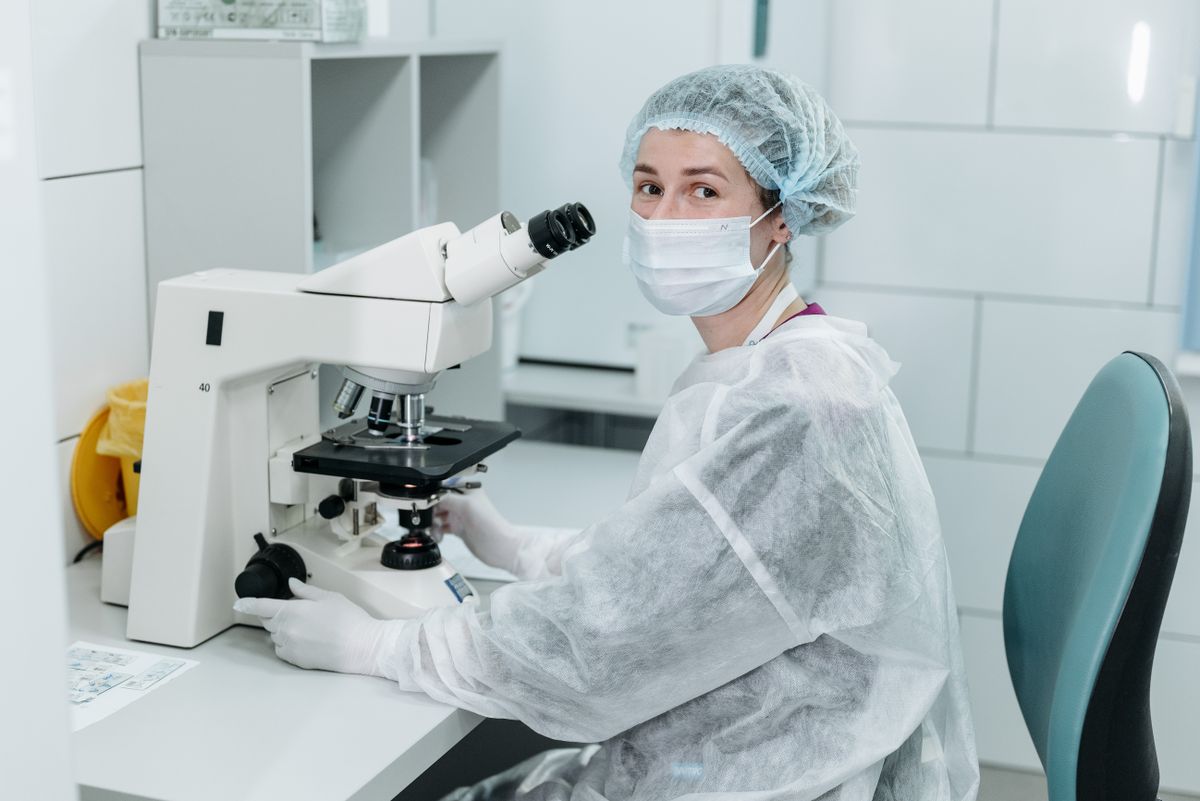
A scientist in protective gear works in a medical laboratory. Rapid lab testing is the front line of Nigeria's Ebola response. Photo: Pavel Danilyuk / Pexels.
On Tuesday, Nigeria's health ministry confirmed something the country has not seen in almost exactly a decade: a case of Ebola. The patient is a woman living in Abuja who had recently arrived from Uganda. She is in isolation, 44 of her contacts have been traced, and Health Minister Muhammad Ali Pate says Nigeria has the systems to contain it — pointing to 2014, when the country stopped Ebola cold.
That confidence is earned. But this is not the 2014 outbreak. The virus is a rarer strain with no approved vaccine and no approved treatment, and it has been burning through central Africa for more than five months. Here is what happened in Abuja, what this strain is, and what comes next.
What Happened in Abuja: The Timeline
The details come from Nigeria's health ministry and the Nigeria Centre for Disease Control and Prevention, reported by Reuters. The woman — a foreign national originally from Uganda, living in Abuja with her husband, a Swiss national — arrived in Nigeria on October 5 and felt unwell from October 7.
On October 11 she went to a private hospital in Abuja with what looked like malaria — the default diagnosis where malaria is endemic. She was treated there for several days before doctors tested for Ebola. The test came back positive on October 19; the ministry confirmed the case on October 20.
Three details matter. First, the 44 contacts traced so far are mostly healthcare workers and fellow patients — people exposed during eight days in the hospital before anyone knew what they were dealing with. Second, authorities are tracing passengers from her Ethiopian Airlines flights, though they do not believe she was symptomatic while flying. Third, Uganda disputes the framing: it says she had also traveled to the DRC, that "travel through Uganda does not establish that infection occurred here," and that Uganda has no confirmed active cases. The true source is almost certainly the DRC — Uganda is the layover, not necessarily the origin.
The Bigger Picture: Five Months Old and Still Growing
The DRC's outbreak was formally declared in mid-May, though it may have started months earlier. The numbers are stark: 9,552 confirmed infections and 4,602 deaths, per the DRC's National Institute of Public Health — a crude fatality rate near 48 percent. Reuters calls it the world's second-largest Ebola outbreak on record, and it is already the deadliest in the DRC's history.
From there it has traveled. Uganda recorded cases earlier and remains on heightened alert. Kenya has nine confirmed infections as of Tuesday evening — all in one known cluster, with 134 of 135 identified contacts traced and quarantined, per Health Director-General Patrick Amoth. Kenya's first cases were linked to a traveler from Congo who passed through Uganda before reaching Nairobi. Patients connected to the outbreak have also been detected or treated in Europe. Africa CDC director-general Jean Kaseya calls it "the most geographically widespread Ebola outbreak in history, affecting multiple countries across three regions of Africa."
What the Bundibugyo Strain Is — and Why It Changes the Math
Ebola is not one virus. The species behind this outbreak is Bundibugyo, first identified in Uganda in 2007 — rarer and less studied than the Zaire species behind the 2014–2016 West Africa catastrophe and the 2018–2020 Kivu outbreak in the DRC.
The difference that matters is pharmaceutical. For Zaire, the world has tools: a licensed vaccine and approved antibody treatments, developed after Kivu. For Bundibugyo, Kaseya confirmed this week, there are no approved vaccines and no approved therapies. None.
Doctors are not helpless — supportive care (fluids, oxygen, treating secondary infections) dramatically improves survival. But containment cannot lean on ring vaccination, the strategy that helped end Kivu, where health workers vaccinated each case's contacts and their contacts. Against Bundibugyo, the playbook is the old one: find cases fast, isolate them, trace every contact, and move faster than the virus.
How Ebola Spreads — and How It Does Not
This is where panic usually outruns facts. Ebola spreads through direct contact with the bodily fluids of someone who is sick — blood, vomit, diarrhea, saliva, semen, breast milk — or through contaminated objects like bedding. It is not airborne. You do not catch it from across a room, or from someone exposed but not yet showing symptoms.
That last point is doing real work in the Abuja story. The incubation period is 2 to 21 days, and during it a person is not contagious. Nigerian authorities do not think the woman was symptomatic on her flights — if that holds, her fellow passengers were never at serious risk, and the flight tracing is precautionary.
Early symptoms are the genuine danger, because they are easy to miss. Fever, fatigue, muscle pain, headache and sore throat give way to vomiting, diarrhea and rash; severe cases bring organ failure and bleeding. In a malaria-endemic city, the first days of Ebola look exactly like malaria — which is what happened in that Abuja hospital for eight days. The natural reservoir is believed to be fruit bats.
Why Nigeria Has Reason for Confidence: The 2014 Playbook
In July 2014, a Liberian-American man named Patrick Sawyer flew into Lagos visibly ill with Ebola. Nigeria — Africa's most populous country, with a fragile health system and a busy travel hub — looked like the worst place for the virus to land. Instead the country mounted one of the great public-health responses in history: nearly 900 contacts traced and monitored, cases isolated, relentless follow-up. Final toll: 20 cases, 8 deaths. On October 20, 2014, the WHO declared Nigeria Ebola-free.
That date is worth pausing on: exactly twelve years, to the day, before this week's confirmation. In between, Nigeria built the NCDC into a real institution and expanded its lab network. Minister Pate's claim that "we have the systems in place" references a specific, documented success — not bluster.
The Honest Analysis: Three Things the Headlines Are Missing
First, the strain is the story, and most coverage underplays it. Every recent Ebola success had ring vaccination in the toolkit. Bundibugyo takes it off the table, so containment depends entirely on speed: finding the sick, tracing contacts, isolating — faster than the virus moves. Nigeria did this in 2014 without vaccines, so it is proven possible, but the eight-day malaria misdiagnosis shows speed is never guaranteed. The number to watch is 44: if those contacts finish 21 days of monitoring with no secondary cases, Nigeria has won this round.
Second, Abuja is a hub, and hubs cut both ways. A capital with international flights and constant movement means an imported case can touch many people fast — but laboratories, specialists, and a functional NCDC are also within reach. That most contacts are healthcare workers is reassuring in a specific way: hospital exposures are the easiest to map completely, because hospitals keep records. The contacts you lose sleep over are the informal ones — shared taxis, markets, gatherings. So far there is no sign of those.
Third, 2014 and 2026 are different wars. In 2014, Nigeria contained a single imported chain while the West African outbreak raged elsewhere; once Lagos was clean, it stayed clean. This time the source outbreak is still active at 9,500-plus cases, Kenya has an ongoing cluster, and the virus has already ridden commercial flights across the continent. Even if Abuja contains this case perfectly, Nigeria may face more imported cases while the regional outbreak burns. The strategic question is not just "can Nigeria stop this one" but "can the region stop the source" — and five months in, the DRC's 48 percent fatality rate is not encouraging.
What Happens Next: Three Scenarios
The most likely outcome is the contained single case: the 44 contacts finish 21 days of monitoring with no secondary infections, and Abuja returns to normal within a month. The 2014 precedent and the speed of this week's tracing both point here.
The second scenario is a small hospital cluster. The eight days of malaria treatment before the Ebola diagnosis are the weak link — if an exposed worker or patient slips through monitoring, secondary cases could surface in the next two to three weeks. The NCDC's playbook assumes some contacts will be missed and layers active daily monitoring on top.
The third scenario is sustained regional pressure. The DRC outbreak shows no sign of ending, Kenya's cluster is still being managed, and air travel keeps moving people across borders. In this scenario Nigeria does everything right in Abuja and still faces another imported case in weeks or months. The long-term fix is not in Abuja — it is in the DRC, and it probably requires the Bundibugyo vaccine research the world never funded because the strain was rare. Rare, it turns out, was temporary.
Frequently Asked Questions
Is Ebola airborne?
No. Ebola spreads through direct contact with the bodily fluids of a sick person — blood, vomit, diarrhea, saliva — or contaminated objects. It does not spread through the air, and people who are infected but not yet showing symptoms are not contagious.
Could I catch Ebola on a flight from Africa?
The risk is extremely low. Ebola is not contagious before symptoms appear, so a fellow passenger is only a risk if they were visibly ill during the flight. Nigerian authorities do not believe the Abuja patient was symptomatic on her flights, which is why tracing co-passengers is precautionary.
Is there a vaccine or cure for this strain?
Not for Bundibugyo. The licensed Ebola vaccine and approved antibody treatments target the Zaire species. Africa CDC's director-general confirmed this week that no approved vaccines or therapies exist for Bundibugyo. Patients receive supportive care — fluids, oxygen, treatment of complications — which significantly improves survival.
What symptoms should I watch for?
Sudden fever, intense weakness, muscle pain, headache and sore throat, then vomiting, diarrhea, rash, and in severe cases organ failure and bleeding. Early Ebola resembles malaria and typhoid — which is why the Abuja case went eight days before testing. Anyone with these symptoms after travel to an outbreak area should seek care immediately and mention the travel history.
How did Nigeria stop Ebola in 2014?
After an infected traveler reached Lagos in July 2014, Nigeria traced nearly 900 contacts, isolated cases, and monitored contacts daily for 21 days. The outbreak ended with 20 cases and 8 deaths; the WHO declared Nigeria Ebola-free on October 20, 2014. The NCDC was built from that experience.
Should I cancel my trip to Nigeria?
Health authorities are not recommending that. This is a single imported case with contacts under monitoring — not community transmission. Know the symptoms, avoid contact with sick individuals and wild animals, practice good hygiene, and seek prompt care for fever. The situation deserves watching, not panic.
Nigeria has been here before, and it won. The open question is whether the region can say the same — because as long as the DRC's outbreak burns, imported cases will keep testing every country's defenses. Twelve years after the WHO declared Nigeria Ebola-free, the systems built in that victory are holding. So far.
For more in-depth explainers on world events, markets, and technology, visit abdulrahimmughal.com.