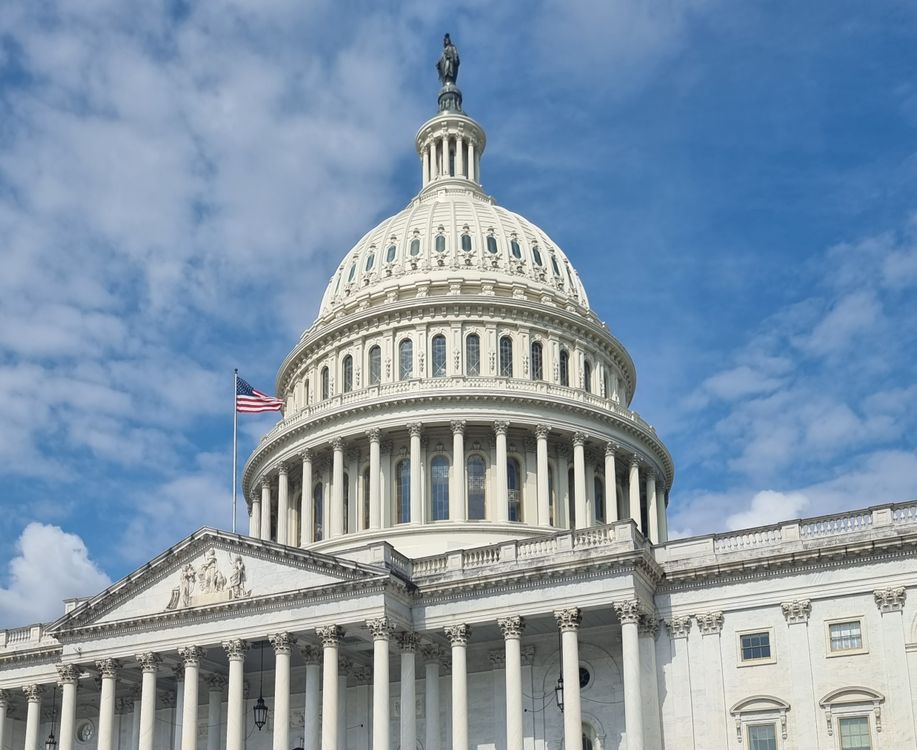
Photo: Pexels
Bitcoin woke up on Wednesday morning at around $77,400, up a little more than 1% on the day, while American stock futures slid. That split tells the story of the morning after the 2026 midterm elections: crypto traders were not celebrating a result so much as trying to price in a new Washington. The votes were cast on Tuesday, 3 November, for all 435 seats in the House of Representatives and 35 of the 100 Senate seats. By early Wednesday, the count was still incomplete, with many races uncalled — but the early pattern was clear enough to move markets, and clear enough to matter for the one piece of legislation the crypto industry has wanted most: a federal market-structure law.
This article explains what happened, what the early results do and do not settle, why the stalled CLARITY Act is the thread running through all of it, and what to watch between now and the new Congress taking office in January 2027. Nothing here is a price prediction. The point is simpler: for the first time in this cycle, crypto's political question is no longer hypothetical. Voters have had their say, and the industry's $200 million-plus bet on this election is about to be marked to market.
The election crypto spent a fortune trying to shape
No industry spent quite like crypto in 2026. A Reuters review put crypto-related spending at roughly $176 million across more than 100 races through 20 October, with the Fairshake super PAC network and its affiliates accounting for about $150.8 million of that. CNBC later reported the industry's total for the cycle at more than $200 million. Coinbase gave Fairshake $25 million between March and June 2025, and Ripple Labs added $25 million in August 2025, according to Federal Election Commission receipts cited in that reporting. Three companies — Coinbase, Andreessen Horowitz's crypto arm and Ripple — supplied more than 80% of Fairshake's money.
The spending had a single legislative goal. The industry wants Congress to pass a market-structure bill that would put most crypto oversight under the Commodity Futures Trading Commission (CFTC), a regulator the industry generally regards as lighter-touch than the Securities and Exchange Commission (SEC). That bill is the CLARITY Act. The House passed it in July 2025 by 294 votes to 134, with support from many Democrats. In the Senate, a procedural vote on 15 September 2026 failed 49–50, short of the 60 votes needed to move it forward.
The sticking points, as reported by CoinDesk and The Block, were ethics rules limiting senior officials' crypto business ties and a fight between banks and crypto firms over rewards paid on stablecoins. Senator Thom Tillis filed a motion to reconsider, which keeps the bill technically alive. Asset manager 21Shares wrote on 28 October that it is "best treated as dead" until the new Congress meets in January 2027. That framing matters: the election did not revive the bill overnight, and it did not kill it either. It changed who gets to decide its next version.
What the early results actually show
Early on Wednesday, results were still coming in, and any honest account has to start with that caveat. According to live data from Decision Desk HQ cited by FXStreet at 02:44 UTC, 201 of the 435 House seats had been called, with Democrats holding 124 and Republicans 77. Later tallies reported by InvestingLive put Democrats ahead 139 to 89 in the House, with 218 needed for a majority and many races still uncalled. In the Senate, the same report put Democrats at 46 seats to 36 for Republicans, a count that includes senators not up for election this year, with 18 seats yet to be decided.
Two Senate results stood out in the early calls. In North Carolina, former Democratic Governor Roy Cooper comfortably defeated Republican Michael Whatley, who was endorsed by President Donald Trump, taking a seat previously held by Republicans. In Georgia, Democrat Jon Ossoff won a second term, fending off a challenge from Trump-backed Mike Collins. Prediction markets had priced a Democratic sweep highly before the count: Polymarket put it at 89.5% in the early hours of Wednesday, according to CryptoCompass's live blog. Those odds are a market sentiment gauge, not a result, and they moved before most seats were called.
Ohio was the race crypto watched most closely, and the most expensive single contest for the industry. Fairshake's Republican-side affiliate, Defend American Jobs, reported about $36.9 million in advertising supporting Senator Jon Husted and $19.7 million opposing Democrat Sherrod Brown, with a further $7.2 million from the Winklevoss twins' Digital Freedom Fund taking the industry's Ohio stake to about $63 million. Brown chaired the Senate Banking Committee until 2024 and refused to move crypto bills; he lost his seat in 2024 and was running again. Fairshake backed only Republicans in Senate races after Democrats blocked the CLARITY Act, while still funding House candidates from both parties — 19 Republicans and 14 Democrats, according to CNBC's reporting. Its next-largest general-election race was Nebraska, where it spent $13.5 million against Dan Osborn.
Why control of Congress matters more than any single race
Crypto regulation in the United States is not written by one committee or one vote. Four committees handle most of it: Senate Banking, Senate Agriculture, House Financial Services and House Agriculture. If control of a chamber changes, so do the committee chairs — and with them, which bills get hearings, which get marked up, and which quietly die. A new chair can also change the tone of oversight hearings for the SEC and CFTC, summoning regulators to explain themselves in ways that shape enforcement long before any law passes.
The arithmetic is unforgiving. Even a chamber majority is not enough on its own: most Senate legislation needs 60 votes to overcome a filibuster, and the CLARITY Act fell 11 votes short of that threshold in September. That is why the lame-duck session — the weeks between the election and the new Congress taking office in January — is unlikely to produce a breakthrough. White House crypto adviser Patrick Witt and Treasury assistant secretary Luke Pettit said as much at CoinDesk's Policy & Regulation event on 22 September: the lame-duck session does not offer enough hope for CLARITY passage to divert attention from what regulators are doing now. Witt added that the focus had shifted to the administration, while conceding the bill was not dead.
That shift is the second track of crypto policy, and it runs regardless of who wins. The SEC has proposed a rulebook for crypto assets, including an "Innovation Exception" for tokenized US stocks announced on 17 September, and the CFTC has advanced proposals on crypto asset markets. Banking agencies and the Treasury are writing rules to implement the GENIUS Act, the stablecoin law that did become law last year. None of that stops on election night. A new Congress can press regulators, hold hearings and eventually rewrite their mandates — but it cannot instantly undo rules already in motion, and regulators keep their current powers whoever wins.
How markets reacted on Wednesday morning
The market reaction was measured, not euphoric. Bitcoin traded at about $77,437 on 4 November, up 1.12% over 24 hours, according to CoinStats, with a 24-hour range roughly between $76,300 and $78,000. CoinMarketCap data cited by Aju Press put Bitcoin at $77,779 at 8 a.m. on 4 November, up 1.38% from the previous day, after dipping into the $76,000 range the day before. Ethereum, the second-largest cryptocurrency, traded at about $2,290, up 1.68%. Support for Bitcoin clustered around $76,000 to $76,500, with overhead resistance between $78,000 and $82,000, and the price sat roughly 38.6% below its all-time high of $126,080.
The more telling numbers were underneath the price. US spot Bitcoin ETFs lost $643.3 million on Friday, 30 October, their largest single-day outflow since 25 June, according to SoSoValue data cited by CoinStats. Short covering explained most of Wednesday's gain: of about $20 million in liquidations over 24 hours, roughly $11.9 million were short positions. The CoinMarketCap Fear and Greed Index stood at 36, still in "fear" territory. In other words, Bitcoin bounced, but from a position of caution, not confidence.
Stock markets told a different part of the story. S&P 500 e-mini futures fell about 1.2% on Globex, with Nasdaq futures down further, as traders priced more friction for AI and data-centre investment and for fiscal policy, including the debt ceiling. The Nikkei fell more than 3% in Japan. The US dollar index slipped 0.52% to 101.32, the 10-year Treasury yield fell six basis points to 4.90%, and the two-year yield dropped five basis points to 4.566%, according to FXStreet. The Wall Street Journal reported bipartisan voter opposition to data centres, with Democratic candidates generally more sceptical of AI than Republicans — and Democratic candidates for governor in Georgia, Texas and Michigan have called for temporary bans on new data centres. Crypto and AI stocks were caught in the same Washington repricing, for different reasons.
Two other forces were pulling in the opposite direction. Brent crude closed at $103.60 a barrel on 3 November, down 1.12%, as hopes for US–Iran negotiations grew; Qatari Foreign Ministry spokesperson Majed Al Ansari said on 3 November that negotiations were moving in a direction that raised expectations. And the Binance overhang had not gone away: the exchange was hit on 29 October by a theft of approximately $6.3 billion in crypto, which the exchange and US authorities linked to North Korea, a story covered in this blog's 1 November post. A market digesting a hack of that size does not need a political shock to stay cautious.
Three ways this can go from here
The first scenario is the one the industry fears most: a Democratic-led Congress that brings more oversight rather than many new laws. Bloomberg reported before the vote that investors were betting a Democratic sweep would tighten regulation of crypto and prediction markets. The areas flagged in pre-election coverage were stricter consumer safeguards, limits on yield-bearing stablecoins, closer scrutiny of exchanges and decentralised finance, and more attention to Trump-linked crypto ventures. In this scenario, the CLARITY Act does not simply get revived; it gets rewritten, with the stablecoin-rewards fight and ethics provisions moving to the centre rather than the margins.
The second scenario is gridlock with a regulatory workaround. Congress splits or stalls, the 60-vote threshold blocks a new market-structure bill, and policy is made instead by the SEC, the CFTC and the Treasury through rulemaking and enforcement choices. This is, in effect, the status quo since September — and it is the scenario the White House advisers were describing when they said the focus had shifted to the administration. It would leave the industry with workable rules in some areas and legal grey zones in others, and it would keep the courts busy: every major rule would be litigated, and every enforcement action would be read as a policy signal.
The third scenario is a narrower deal. A new Congress, facing the same 60-vote Senate maths, passes something smaller than CLARITY: stablecoin implementation fixes, clearer custody rules, or a compromise on which tokens fall under SEC versus CFTC jurisdiction, leaving the hardest questions for later. This is less satisfying as a headline and more plausible as legislation. It is also the pattern of American financial regulation in divided government: big bills stall, small bills slip through attached to must-pass legislation, and regulators fill the gaps in between.
My own reading, for what it is worth, is that the second and third scenarios are more likely than either a clean industry victory or a regulatory crackdown. Three reasons. First, the Senate's 60-vote rule has already killed the maximalist version of this bill once, and an election that changes committee chairs does not change that arithmetic. Second, the GENIUS Act shows Congress can pass crypto law when the coalition is broad; the CLARITY fight shows it cannot when banks and crypto firms are pulling in opposite directions over stablecoin rewards. Third, the money spent in 2026 bought access and attention, not votes: Fairshake's candidates still have to govern in a chamber where crypto is one issue among many, and where the midterm's dominant issues — the economy, at 39% in preliminary NBC exit polling, and Trump approval, at 38% — were not crypto at all.
There is also a longer, quieter pattern worth noting. A widely shared Instagram carousel by creator Jack Garzon on 3 November cited CryptoQuant data showing Bitcoin rose in the 12 months after the 2014 (+25%), 2018 (+45%) and 2022 (+92%) midterms — "three for three." That is a real chart with a real source, but it is also three data points, and past performance is not a forecast. The mechanism behind it is plausible — uncertainty lifts before an election and policy clarity, of whatever kind, follows — but the sample is small, the causes differ each time, and 2026 has its own complications, from the Binance hack to the Iran negotiations, that no midterm chart can capture. Treat it as context, not as a promise.
What to watch next
Five things will tell you which scenario is unfolding. First, the final House and Senate counts, and whether either chamber actually changed hands — early leads are not majorities. Second, the new committee chairs announced in December and January, particularly Senate Banking and House Financial Services. Third, whether the lame-duck Congress attempts anything on crypto at all, or lets the bill wait for January. Fourth, the SEC and CFTC rulemakings: their timelines, their comment periods, and whether a new Congress tries to rein them in. And fifth, the stablecoin-rewards fight — the seemingly technical dispute that helped sink CLARITY in September, and that pits banks' deposit business directly against crypto firms' yield products. Watch that fight and you will understand the next bill before it is written.
For ordinary crypto holders, the practical takeaway is unglamorous but useful: no law changes on election night, no regulator loses power the morning after, and no price level — $76,000 support or $82,000 resistance — is a verdict on the election. What changes is the negotiating table. A new Congress means new chairs, new priorities and a new version of the bill the industry has spent $200 million trying to pass. The next few months will show whether that bill is broader, narrower, or simply later than the one that failed in September.
Frequently asked questions
Did the midterms decide crypto regulation?
No — not yet. The midterms decided who controls Congress and its committees, but the final counts were still incomplete on Wednesday morning, the new Congress does not take office until January 2027, and any market-structure bill still needs 60 Senate votes. The election changed the negotiators, not the law.
What is the CLARITY Act, and why does it matter?
The CLARITY Act is the main US crypto market-structure bill. It would set the rules for crypto markets, including how oversight is split between the SEC and the CFTC. The House passed it in July 2025, but a Senate procedural vote failed 49–50 on 15 September 2026, short of the 60 votes needed. Until something like it passes, much of crypto operates under regulator-made rules rather than a single statute.
Why did crypto companies spend so much on the election?
Because the rules of their business are written in Congress. Crypto groups spent more than $200 million on the 2026 cycle, according to CNBC, with Fairshake and its affiliates accounting for about $150.8 million through 20 October. The goal was a Congress willing to pass a market-structure bill; the Ohio Senate race alone drew about $63 million in industry spending.
Why did Bitcoin rise on Wednesday if results were uncertain?
Mostly short covering, not euphoria. Bitcoin rose about 1.1% to around $77,400, but short positions accounted for roughly $11.9 million of about $20 million in liquidations, ETF outflows had hit $643.3 million on 30 October, and the Fear and Greed Index remained at 36, in "fear" territory. Hopes for US–Iran negotiations, which also pulled oil prices down, helped sentiment at the margin.
What happens to crypto rules before January 2027?
Regulators keep working. The SEC and CFTC are advancing crypto rulebooks, and banking agencies and the Treasury are implementing the GENIUS stablecoin law. The lame-duck Congress is unlikely to pass a market-structure bill, according to White House and Treasury officials speaking in September. Real legislative movement waits for the new Congress, its committee chairs and the 60-vote Senate arithmetic.
Does a Democratic Congress mean a crypto crackdown?
Not necessarily. Pre-election reporting suggested a Democratic-led Congress could bring stricter consumer safeguards, limits on yield-bearing stablecoins and closer scrutiny of exchanges, but passing new restrictions also needs 60 Senate votes and a presidential signature. Tighter oversight hearings and slower legislation are more likely than a sweeping crackdown.
For more on crypto markets and the stories behind them, visit abdulrahimmughal.com.
Sources
- FXStreet, "US Midterm Elections: Democrats score early wins, weighing on US Dollar" (4 November 2026) — fxstreet.com
- InvestingLive, "US futures slide as Democrats lead midterm count, AI data centre fears hit tech" (4 November 2026) — investinglive.com
- Associated Press, 2026 election results (Senate and House) — apnews.com
- CryptoCompass, "Midterm Election Results 2026 Live: Who Wins the Senate and House, and What It Means for Bitcoin" (4 November 2026) — cryptocompass.com
- CoinDesk, "Crypto market structure can't wait for shot at post-election Clarity Act surge: White House" (22 September 2026) — coindesk.com
- CoinDesk, "Big crypto wants the one thing it can't buy: your vote" (2 November 2026) — coindesk.com
- Rebatly, "US Midterms 2026 and Crypto: What to Watch on 3 November" (29 October 2026) — rebatly.io
- AltcoinLog, "Crypto's $176 million midterm bet: the Senate races that decide it" (1–2 November 2026) — altcoinlog.com
- VaultX, "Crypto Stakes Ride on US Midterms as Markets Expect…" (4 November 2026) — vaultx.llc
- CoinStats, "Bitcoin (BTC) News Today: Why BTC Is Up – 04 November 2026" — coinstats.app
- Aju Press, "Bitcoin Recovers to $77,000 Amid U.S.-Iran Negotiation Hopes" (4 November 2026) — ajupress.com
- Longbridge, "Bitcoin Returns to $77,000; Mid-Term Election Outlook Remains Bullish for Medium to Long Term" (4 November 2026) — longbridge.com
- Instagram post by Steven Anderson (@andersonnsteven), 3 November 2026 — instagram.com/reel/DfRtr-MILxK
- Instagram carousel by Jack Garzon (@jackgarzonr), 3 November 2026 — instagram.com/p/DfQnuoYHSHt