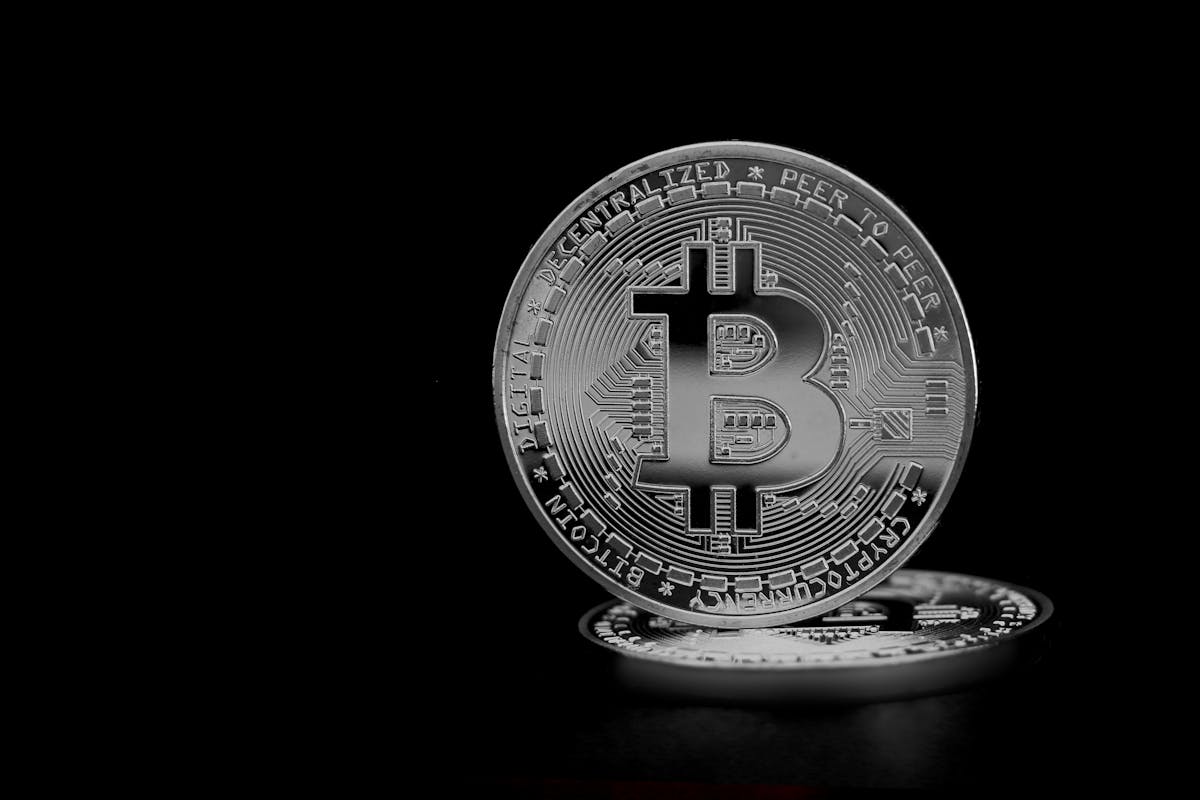
Bitcoin traded near $81,000 on October 18, 2026, as "Bitcoin to zero" Google searches spiked 450% in 24 hours. Photo: Pexels.
This week, millions of people typed two words into Google they never type in a bull market: "Bitcoin to zero."
Searches for the phrase jumped 450% in 24 hours — the heaviest spike since the FTX collapse — with 1.5M+ searches concentrated in the U.S., peaking in New York, California, and Texas, per Google Trends tracking on October 18.
And Bitcoin itself? It was trading near $81,000–$82,000 on October 18. Down hard from its record — but nowhere near zero. So what are all these people afraid of, and is any of it grounded in something real? Below: what triggered the panic, what the search data shows, what would have to happen for Bitcoin to truly hit zero, and why analysts read the same data in opposite ways.
The week that scared everyone: the October 10 liquidation crash
On October 10, 2026, crypto markets suffered the largest liquidation event in their history — and it started with a misread press release.
On October 9, China announced new rare-earth export rules — not a full ban; compliant firms could still export. Trump read it as a complete halt, threatened 100% tariffs on Chinese imports, and scrapped a planned meeting with Xi Jinping. Total crypto market cap fell from ~$4.25 trillion to ~$4.05 trillion within hours — roughly $200 billion gone, per CoinGecko.
Bitcoin dropped about 10%, from ~$122,000 to ~$105,000–$108,000. But the tariff threat was only the spark. The real damage was leverage: an estimated $19.21 billion in positions was liquidated in 24 hours — twelve times the FTX-crash record of $1.6 billion. More than 1.6 million traders were wiped out, over 80% of them leveraged long, liquidated at a 7-to-1 ratio against shorts. Bitcoin printed its first-ever $20,000 candlestick.
Exchange failures made it worse. On Binance, the USDe stablecoin depegged to $0.65 (above $0.90 elsewhere), triggering nearly $1 billion in forced liquidations inside Binance's margin system. Some altcoins fell 50–80% in minutes. Notably, the selloff had started at 9:30 AM ET — before Trump's first tariff post — with large traders already opening shorts.
The recovery began with one social media post. After China clarified its rules were limited, Trump posted: "Don't worry about China, it will all be fine!" Bitcoin bounced toward $114,000 — but the bounce did not hold. By mid-October it had slid to $80,500–$82,500, about 35% below the $126,080 all-time high of October 2025, and down ~4% on the month. The fabled "Uptober" rally never arrived. That slow bleed after the October 10 shock is what pushed fear searches to their peak.
What the search data is actually telling us
The headline numbers look like despair: Willy Woo's long-term chart of Google searches for "Bitcoin" and "BTCUSD" from 2011 to October 2026 shows both at multi-year lows — the weakest retail interest in years.
But the second half of the data tells a different story. While "Bitcoin" searches faded, "buy crypto" searches hit new annual highs in October 2026. Retail money is not leaving the industry — it is rotating into alternative tokens hunting bigger returns. As one analysis noted, "the direct dependence of the exchange rate on retail users' clicks has weakened with the inflow of institutional capital."
Underneath the panic, a quieter signal: on the morning of October 18, CryptoMeter flow tracking showed $58.38 million entering Bitcoin in five hours — dwarfing every other asset, with nothing else above $5 million. The price sat at $81,725, up just 0.2% on the day. Flat price action with a dominant inflow print is what traders watch for: steady accumulation not yet chasing the price. Ethereum drew a distant-second $4.76 million.
Retail Google users are typing "Bitcoin to zero." Institutional money is buying Bitcoin. That split is the most important fact in this story.
The contrarian case: why veterans buy fear
Willy Woo's reading is blunt: "The best time to buy BTC is when nobody is interested in it. The best time to sell is when absolutely everyone is involved." The 2017 and 2021 search peaks coincided with bull market tops — maximum attention was maximum risk.
Valuation measures agree. Bitcoin's MVRV percentile — market value versus realized value — has fallen to around 25.7%, below the 30th percentile: a historically low range that has often marked accumulation zones. The Fear & Greed Index sat at 27 on October 18. The logic is simple: when everyone searching for Bitcoin is searching for its death, little panicked selling remains. Not a guarantee — contrarians have been early and wrong before — but a pattern repeated through every cycle so far.
The honest question: what would it actually take for Bitcoin to go to zero?
Most "Bitcoin to zero" searches are expressions of emotion, not analysis. But the question is worth asking properly: Bitcoin at zero means every bitcoin becomes worthless — which requires one of three extraordinary things.
1. The network itself would have to die. Bitcoin runs on tens of thousands of nodes and miners across dozens of countries. In 2021, China — then the dominant mining country — banned mining outright. Hash rate halved. The protocol adjusted difficulty automatically, blocks kept coming, and hash rate fully recovered as miners relocated. At $81,000, efficient miners stay profitable, and there is no single switch to flip. Killing the network would mean shutting down mining in every jurisdiction on earth at once.
2. The cryptography would have to break. The serious version of the zero case is quantum computing: a powerful enough quantum machine could, in theory, crack wallet encryption. It is a real long-term research problem — but not a surprise. "Bitcoin quantum" searches peaked in November 2025 and have been falling since, and the industry is already funding quantum-resistant research, including protections that would not require changing wallet addresses. One analyst's verdict: quantum risk is "an amplifier of existing bearish sentiment, not a standalone driver."
3. All demand would have to vanish at once. With a market cap above $1.6 trillion, held in spot ETFs and corporate treasuries and traded on regulated exchanges worldwide, zero requires every buyer on earth to refuse bitcoin at any price — including $1. Markets do not work like that: lower prices bring new buyers, exactly as the October 18 inflow data showed.
Could Bitcoin fall another 30%, 50%, even 70%? History says yes — -95% in 2011, -84% in 2017–2018, halved in a day in March 2020, down to ~$15,500 after FTX. Every collapse produced obituaries; every one was followed by a recovery to new highs, most recently $126,080 in October 2025. A 70% crash is not zero. Confusing the two is the central mistake in this panic.
Why this cycle is different — in both directions
My read: in past cycles, Bitcoin's price lived and died on retail attention. That era is ending — institutional capital now provides a structural bid that did not exist in 2017 or 2021, which is why the current search collapse has hurt the price less than equivalent retail retreats in past cycles.
But it cuts both ways. At $1.6 trillion, Bitcoin is a macro asset now — it trades on Treasury yields, the Fed's policy rate near 3.7%, tariff wars, and genuine geopolitical fear. The World Uncertainty Index sits at the highest level in the Federal Reserve Bank of St. Louis's entire time series — above the 2008 crisis and the 2020 COVID shock. At record uncertainty, the world's largest speculative asset gets no free pass just because its technology works.
"Zero" is structurally harder to reach than at any point in Bitcoin's history — but long, grinding drawdowns are easier, because Bitcoin now falls when macro liquidity tightens, not just when retail panics. October 10 was a leverage event, not a network failure. Leverage events end. Macro tightening lasts.
Frequently asked questions
Why is everyone searching "Bitcoin to zero" right now?
October 10, 2026 delivered the largest liquidation event in crypto history — $19.2 billion wiped out in 24 hours after a U.S.–China tariff scare — and Bitcoin kept sliding after, down ~35% from its $126,080 record. Fast-falling prices plus alarming headlines produce fear searches; Google Trends shows the spike concentrated in the U.S., at the highest level since FTX.
Has Bitcoin ever gone to zero before?
No. It has survived declines that felt terminal — -95% in 2011, -84% in 2017–2018, a one-day halving in March 2020, and the FTX collapse when it fell to ~$15,500. Each crash produced mainstream obituaries, and each was followed by a recovery to a new all-time high. Severe drawdowns are normal for Bitcoin; zero has never happened.
Could quantum computing kill Bitcoin?
It is the most serious technical risk, but not an imminent one. No quantum computer capable of breaking Bitcoin's cryptography exists yet, and the industry is already funding quantum-resistant research — including protections that would not require changing wallet addresses. "Bitcoin quantum" searches peaked in November 2025 and have been declining: the market treats it as background risk, not an active threat.
What exactly happened in the October 10, 2026 crypto crash?
President Trump threatened 100% tariffs on China after misreading Beijing's rare-earth export rules as a full ban. The announcement triggered cascading liquidations: $19.21 billion in 24 hours across 1.6 million traders, longs liquidated 7-to-1 against shorts. Bitcoin fell ~10% from ~$122,000; some altcoins fell 50–80%, worsened by failures on Binance. Trump's "Don't worry about China, it will all be fine!" sparked a rebound toward $114,000 — which later faded.
Is extreme fear a buying signal for Bitcoin?
Historically, fear extremes have marked opportunity zones more often than danger zones: peak attention coincided with the 2017 and 2021 tops, while minimal interest often preceded recoveries. Valuation metrics sit in historically low ranges, and institutional inflows continued through the panic. But sentiment is not timing — fear can persist for months and prices can fall further. Educational context, not financial advice; always do your own research.
The takeaway
The "Bitcoin to zero" panic is a thermometer, not a forecast. It measures how the market's most emotional segment feels — and right now it feels terrible. The fundamentals behind it are real: record global uncertainty, a genuine trade war, the worst liquidation cascade in crypto history, and a price 35% below its peak.
But thermometers do not predict the weather. The network is intact, institutions are accumulating into the fear, and "zero" would require the simultaneous failure of the network, the cryptography, and all global demand — unprecedented for any asset of this size. The realistic risk was never zero. It is the long grind in between: macro-driven drawdowns that punish leveraged traders while patient capital waits. Less exciting than "going to zero" — and the one the data supports.
For more in-depth analysis on crypto markets and the global economy, visit abdulrahimmughal.com.