Update: The FBI attributed the hack to North Korea on 2 November 2026, and Binance reopened withdrawals in phases from 1 November 2026.
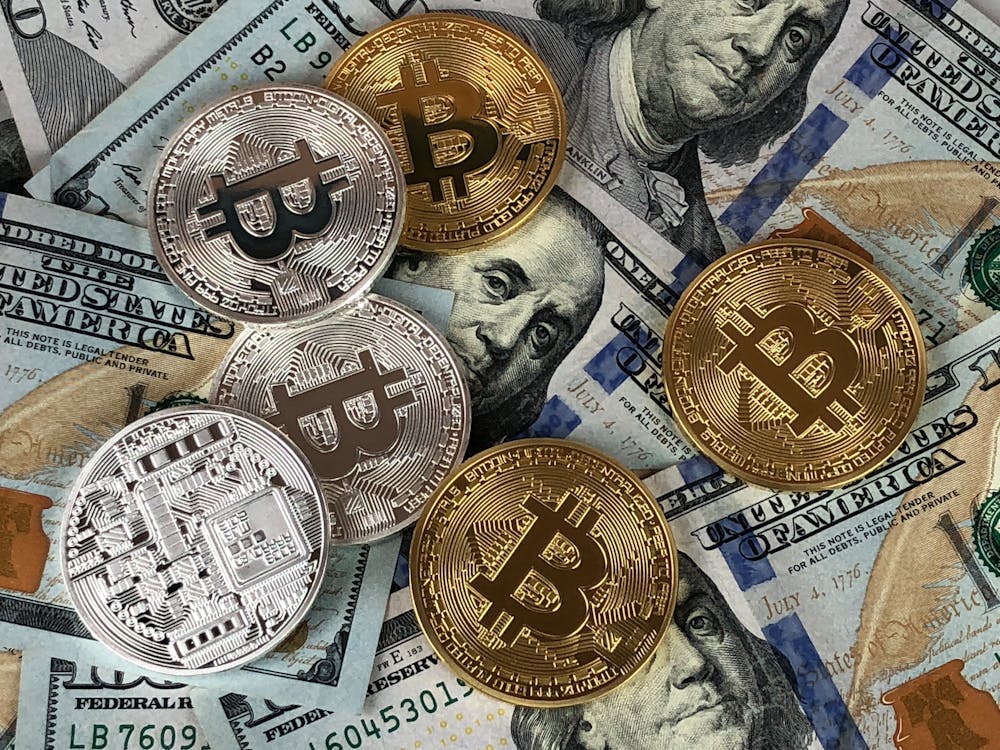
Photo: Pexels (David McBee)
On Thursday night, the world's largest cryptocurrency exchange was robbed of roughly $6.3 billion. By Friday morning, the theft had a name in the record books: the biggest crypto heist ever, about four times larger than the previous record. Bitcoin fell to its lowest price in six weeks, more than $1.5 billion in leveraged bets were wiped out, and hundreds of millions of Binance customers woke up to a question they had never seriously had to ask: is my money still there?
Binance says yes. The exchange has pledged to cover every loss from its emergency reserve and its own funds, and says about $3 billion of the stolen assets has already been frozen with help from industry partners. But roughly $3.3 billion remains unaccounted for, withdrawals are paused, and the people blamed for the attack — a North Korean hacking unit with a long record of draining exchanges — are not the kind of thieves who give money back.
This is what happened, how it happened, what it means for anyone holding crypto on an exchange, and what to watch next.
What happened: $6.3 billion gone in about 20 minutes
The outflows began late on Thursday, October 29. According to blockchain data cited by The National, funds started leaving Binance's hot wallets — the internet-connected wallets exchanges use to process customer withdrawals — at about 12:24 a.m. UAE time on October 30. One single transaction moved roughly 167,464 Ether, worth about $388 million, along with 63 other tokens, to an address created just hours earlier and funded through the Tornado Cash mixing service.
Most of the damage, according to one detailed reconstruction, happened in roughly 20 minutes, across ten blockchains: Ethereum, Bitcoin, Tron, the XRP Ledger, Solana and five others. Blockchain analytics firm TRM Labs traced about $6.36 billion leaving Binance wallets in total. Chainalysis, another leading analytics firm, estimated the haul at $5.912 billion at the time of the theft. Binance itself put the total impact at about $6.3 billion.
The numbers differ because they measure slightly different things — stolen tokens at the moment of theft, versus the exchange's own estimate of total impact — but every version of the story lands in the same place: this is not close to anything seen before.
Binance suspended withdrawals while it investigated, and temporarily paused trading on its Alpha platform. Deposits, after some conflicting early messages, were reported to be operating normally by Friday, but that distinction matters less than it sounds: until withdrawals reopen, a balance on Binance is a number on a screen, not coins a customer controls.
How the attackers got in: one engineer's laptop
Binance's preliminary investigation points to something almost embarrassingly ordinary. The exchange said the attacker compromised a DevOps engineer's laptop and used it to reach a service container, then submitted unauthorised withdrawals. TRM Labs reported finding test runs of the attack code on other wallets hours before the main theft — a rehearsal, in other words, before the real performance.
That detail is worth pausing on, because it cuts against the popular image of a crypto hack. There was no broken encryption, no cracked blockchain. Bitcoin's network kept working exactly as designed throughout. What failed was the plumbing around it: a single employee's machine, a service with enough access to move customer funds, and controls that apparently did not stop a flood of withdrawals across ten chains in twenty minutes.
It is also a pattern. Security researchers have long warned that the weakest point in a crypto exchange is rarely the cryptography — it is the humans and the internal systems that hold the keys. The Binance attack, on Binance's own early account, is a textbook case: compromise one trusted endpoint, ride its permissions, and move fast enough that nobody can react until the money is already gone.
The market reaction: Bitcoin to $76,400, $1.57 billion liquidated
The market did not wait for the full story. Bitcoin dropped to an overnight low of $76,400, its lowest since September 18, before recovering some ground to trade around $77,000–$78,600 through Friday. Ether briefly hit $2,170 before rebounding to about $2,220. BNB, Binance's own token, fell more than 8% in 24 hours to about $694, according to CoinGecko data cited by Reuters.
The damage spread beyond spot prices. Crypto liquidations — forced closures of leveraged bets — jumped fourfold to $1.57 billion after the hack, according to CoinDesk data. More than $1.3 billion in leveraged long positions were liquidated within five hours of the news breaking, and Binance itself accounted for 49.1% of all liquidations, the largest share of any exchange. One widely cited figure put about $628 million liquidated in a single hour.
The timing made things worse. Bitcoin had already slipped below $80,000 earlier in the week after the Federal Reserve's October 28 decision to hold rates at 3.75%–4.00%, with two members voting for a hike. Sentiment was already fragile: CoinMarketCap's Fear and Greed Index fell 10 points in a week to 38, moving from "Neutral" to "Fear". The hack turned a nervous market into a panicked one, at least for a night.
And yet, there is a detail that cuts the other way. US spot Bitcoin ETFs still attracted $137.3 million on the day, led by BlackRock's IBIT, even as Ethereum ETFs saw $21.4 million in outflows. Institutional buyers, in other words, did not all run for the exit. The sell-off was real, but it was driven more by leverage and fear than by a wholesale institutional abandonment of Bitcoin.
Who is blamed: TraderTraitor, North Korea's crypto unit
Two of the industry's most respected blockchain analytics firms have pointed the finger in the same direction. TRM Labs linked the attack "with high confidence" to TraderTraitor, a North Korean hacking group, and Chainalysis reached the same conclusion. TRM also said the attacker still controls more than 420,000 ETH and 18,270 BTC — roughly $2.4 billion that nobody has been able to lock — and expects the next moves to run through cross-chain bridges, swap services and over-the-counter brokers, the usual laundering toolkit.
Binance itself has not confirmed the North Korea link, saying only that it is working with law enforcement to identify the attackers. That caution is understandable — attribution in cyberattacks is hard, and exchanges prefer to let investigators speak — but the context is damning. The FBI previously attributed the $1.5 billion Bybit theft of February 2025 to North Korea, a charge Pyongyang denied. Security firm Check Point notes that TraderTraitor is also known as Lazarus Group, the name most people have heard. Several features of the Binance attack, analysts say, echo the Bybit theft.
CNN's reporting on the story on October 30 carried the same attribution, with correspondent Gage Goulding reporting that investigators say North Korea is likely responsible and that TRM Labs cited "robust and off-chain intelligence" for the link. Binance co-founder Changpeng Zhao, who no longer runs the exchange, wrote on X that the activity "does look like a hack on Binance" in the early hours of the incident.
Why would North Korea steal crypto at this scale? Western governments and UN investigators have argued for years that the regime uses stolen cryptocurrency to fund its weapons programmes, bypassing sanctions that have cut it off from the normal financial system. If that is the motive here, the $3 billion already frozen matters enormously — and so does the $3.3 billion that is not. Every day the remaining funds stay mobile is another day they can be laundered into something untraceable.
How big is it, really? Bigger than everything before it — combined
The scale is hard to overstate. Here is how the Binance theft compares with the previous headline crypto hacks, using the figures reported at the time of each incident:
- Binance, October 2026: about $6.3 billion (exchange estimate; Chainalysis: $5.9 billion at theft)
- Bybit, February 2025: about $1.5 billion (FBI-attributed to North Korea)
- Ronin Network, 2022: about $625 million
- BNB Chain bridge, 2022: about $570 million in unauthorised token issuance
- Bitget, September 2026: about $387.5 million (also blamed on North Korea)
- Binance itself, 2019: about $40 million (7,000 BTC at the time)
Put another way, the Binance theft alone is roughly four times the Bybit record, ten times the Ronin hack, and larger than the six biggest previous incidents put together. It is also equivalent to about a quarter of everything the analytics firm Crystal Intelligence tracked as lost to crypto hacks, scams and fraud between 2011 and March 2025 — about $22.7 billion in total. The industry lost $3.4 billion across all of 2025, and hacks in 2026 had already added a further $2.35–$2.68 billion before this attack, according to estimates from Lightning.news and CertiK. One incident has now nearly doubled the year's total.
That comparison needs a caveat: "stolen" and "lost forever" are not the same thing. About $3 billion has been frozen, helped by stablecoin issuers Tether and Circle locking tokens. If more is recovered, the final unrecovered figure will be smaller. But even the frozen half tells a story — about how much of the crypto system now depends on centralised issuers being willing and able to hit the brakes.
Are Binance users' funds safe? The honest answer
Binance's answer is unambiguous. "Binance will cover all losses from the SAFU fund and the company's funds. User funds are safe," the exchange said, referring to its Secure Asset Fund for Users, an emergency reserve set up in 2018 for exactly this kind of event. Founder Changpeng Zhao has said he expects all user funds to be covered. Binance has also promised an updated proof of reserves once remediation is complete, and a technical post-mortem when the investigation ends.
There are three reasons to take that pledge seriously, and two reasons to keep asking questions.
First, Binance can afford it in a way most exchanges cannot. The exchange has more than 300 million registered users and reported about $162.8 billion in customer assets in its 2025 annual report. A $6.3 billion hole is enormous, but it is not existential for a company of that size — unlike, say, the Bybit hack, which threatened a much smaller exchange's survival.
Second, the 2019 precedent: when Binance lost 7,000 BTC (about $40 million at the time), it covered the loss from SAFU and customers were made whole. The fund exists for this reason, and it has been used before.
Third, the freeze rate. Getting roughly half the haul frozen within hours, with Tether and Circle cooperating, shows that the industry's emergency machinery actually works — at least for tokens whose issuers can freeze them.
The questions are about the gap. Reporting citing The Block put SAFU at about 15,000 BTC after a conversion in February — roughly $1.17 billion at current prices, less than a fifth of a $6.3 billion loss. Binance has not said exactly how much sits in SAFU today. That means the bulk of the coverage would come from company funds, and customers are being asked to trust that those funds are there, liquid, and committed. The promised proof of reserves will help — when it arrives.
The second question is timing. Binance said it expects withdrawals to resume within 48 hours while it rebuilds the withdrawal service's security and related addresses. That is a target, not a guarantee, and the exchange has not said when withdrawals will definitely resume. Until they do, customers cannot verify anything for themselves. A pledge is not the same as access.
One reassurance is firmer: Binance.US and Coinbase both say they were not affected. The attack hit Binance's global platform, not its separately operated US arm.
What this means: three things that will outlast the headlines
1. The custody lesson, relearned the expensive way. Every major exchange hack produces the same advice — "not your keys, not your coins" — and every time, most users ignore it, because exchanges are convenient. The Binance hack is the strongest version of that lesson yet: the world's biggest, most sophisticated exchange, with the deepest security budget in the industry, lost $6.3 billion through one laptop. Self-custody (a hardware wallet, keys you control) is less convenient and carries its own risks — lose the keys and the money is gone forever — but it removes exactly the single point of failure that failed here. The rational response is not to abandon exchanges entirely; it is to stop treating them as vaults. Money you cannot afford to lose, or do not need to trade this week, does not belong on any exchange.
2. North Korea has industrialised crypto theft — and the industry has industrialised the response. The Bybit theft was treated as a shocking outlier in February 2025. Twenty months later, the same playbook allegedly produced a theft four times larger. But the response has also scaled: $3 billion frozen within hours would have been unthinkable in the era of the Mt. Gox collapse, when stolen coins simply vanished. The uncomfortable truth is that both sides are getting better. Attackers rehearse, move across ten chains at once, and launder through bridges and brokers. Defenders freeze stablecoins, trace wallets in real time, and coordinate across companies and law enforcement. The race is now a permanent feature of the crypto market, not a passing phase — and its outcome will shape whether large institutions keep treating crypto as a safe place to park capital.
3. Regulation just got its best argument — and its hardest test. The hack lands days before the US midterm elections on November 3, with the future of American crypto legislation hanging on the result. Supporters of tighter exchange rules — mandatory proof of reserves, stricter custody requirements, faster incident disclosure — now have a $6.3 billion exhibit. Critics will counter that the freeze of $3 billion proves the current system works without new laws, and that heavy-handed rules would push trading offshore, beyond any regulator's reach. Both arguments will be made loudly in the coming weeks. What is harder to argue is that the status quo is fine: an industry that can lose $6.3 billion in twenty minutes through one compromised laptop has a security problem that no amount of market growth will fix on its own.
What happens next: five things to watch
First, withdrawals. The 48-hour target is the most immediate test of Binance's credibility. If withdrawals reopen on schedule and in full, much of the panic will fade. If the deadline slips, expect a second wave of selling.
Second, the frozen total. Binance says further freezes are possible as investigators trace the remaining funds with law enforcement and blockchain intelligence firms. Every additional billion frozen shrinks the loss and strengthens the coverage pledge.
Third, the proof of reserves. Binance has promised an updated one. Watch for whether it is independently audited, how it treats the SAFU balance, and whether it covers the full gap — not just a reassuring headline number.
Fourth, the post-mortem. The technical report, when it comes, will matter more than the press statements. Did the attacker have help? Were withdrawal limits bypassed, or simply never set? Were there alerts that went unanswered during those twenty minutes? The answers will determine whether this was bad luck or a systemic failure.
Fifth, the political response. With midterms days away and crypto legislation in flux, expect lawmakers in Washington, Seoul, Brussels and beyond to cite this hack — some to demand action, others to warn against overreaction. The policy debate that follows may matter more, in the long run, than the price of Bitcoin next week.
Frequently asked questions
Is Binance safe to use after the hack?
Binance says it will cover all losses from its SAFU fund and company funds, and about $3 billion of the stolen assets has been frozen. Withdrawals are paused while the exchange rebuilds its withdrawal security, with a target of resuming within 48 hours. Until withdrawals reopen, treat any balance as a claim on Binance rather than coins you control, and avoid depositing funds you need immediate access to.
Was my money stolen?
Not necessarily. A paused withdrawal is not the same as a confirmed loss in an individual account. The theft hit Binance's hot wallets; the exchange has pledged to cover losses in full. Individual customers will only know their position for certain once withdrawals resume and balances can be moved and verified.
How did the hackers steal $6.3 billion?
According to Binance's preliminary investigation, the attacker compromised a DevOps engineer's laptop, reached a service container, and submitted unauthorised withdrawals across ten blockchains, most of it in about twenty minutes. Blockchain analysts reported test runs of the attack code hours beforehand.
Who hacked Binance?
TRM Labs and Chainalysis both attribute the attack with high confidence to TraderTraitor, a North Korean hacking unit also known as Lazarus Group. Binance has not confirmed the attribution and says it is working with law enforcement. North Korea denied involvement in the earlier Bybit theft, which the FBI also attributed to it.
Is this the biggest crypto hack ever?
Yes, on the reported figures. At about $6.3 billion, it is roughly four times the $1.5 billion Bybit theft of February 2025, the previous record, and larger than the six next-biggest incidents combined. Final unrecovered losses will depend on how much more is frozen or recovered.
Should I move my crypto off exchanges?
Security experts generally recommend keeping only funds you actively trade on an exchange, and moving longer-term holdings to a hardware wallet you control. Self-custody removes the single-point-of-failure risk shown here, but it also means you alone are responsible for your keys — losing them means losing access permanently.
Conclusion
The Binance hack will be remembered as a number — $6.3 billion, the largest crypto theft in history. But its real significance is quieter. It proved that scale is not safety: the biggest exchange, with the most resources, fell to the oldest trick in the book, a compromised employee machine. It proved that the industry's emergency response has grown up: $3 billion frozen in hours is a genuine achievement. And it proved that the central tension of crypto — convenience versus control — is still unresolved, and still expensive.
For ordinary users, the takeaway is practical, not philosophical. Keep trading funds on exchanges and savings somewhere you control. Wait for withdrawals to reopen before judging Binance's pledge. And watch the post-mortem, not the press releases — because the difference between a freak accident and a systemic failure is written in the details Binance has not shared yet.
This article will be updated as Binance releases its proof of reserves and technical post-mortem. Figures cited here are preliminary reports as of October 30, 2026, and may change.
For more on crypto markets and digital finance, visit abdulrahimmughal.com.
Sources
- Reuters — "Bitcoin, cryptocurrency prices fall after Binance reports security issue" (October 30, 2026): https://www.reuters.com/technology/bitcoin-cryptocurrency-prices-fall-after-binance-reports-security-issue-2026-10-30/
- CoinDesk — "BTC price falls to $76,400; Binance hack triggers $1.57 billion in liquidations" (October 30, 2026): https://www.coindesk.com/markets/2026/10/30/crypto-liquidations-jump-to-usd1-57-billion-as-binance-hack-sends-bitcoin-ether-lower
- The National — "How a $6 billion hack became the world's biggest crypto theft" (October 30, 2026): https://www.thenationalnews.com/future/technology/2026/10/30/how-a-6bn-hack-became-the-biggest-crypto-theft-in-history/
- CoinCentral — "Bitcoin sinks to $76,000 as Binance loses $6 billion in historic hack" (October 30, 2026): https://coincentral.com/bitcoin-btc-price-sinks-to-76000-as-binance-loses-6-billion-in-historic-hack/
- Crypto Times — "Bitcoin drops to $76,443 as $6.3B Binance hack sparks $1.57B liquidations" (October 30, 2026): https://www.cryptotimes.io/2026/10/30/bitcoin-price-today-btc-drops-to-76443-as-6-3b-binance-hack-sparks-1-57b-liquidations/
- MoneyToday — "Bitcoin faces crucial test at U.S. midterm elections" (October 30, 2026): https://www.mt.co.kr/en/stock/2026/10/30/2026103017202599523
- CNN on Instagram (@cnn) — Instagram reel reporting the Binance hack, North Korea attribution, and $3 billion frozen figure (October 30, 2026): https://www.instagram.com/reel/DfHbeJCqVrX/
- Binance statements and service updates as reported by the outlets above (SAFU coverage pledge, ~$3 billion frozen, 48-hour withdrawal target, proof-of-reserves and post-mortem promises).